
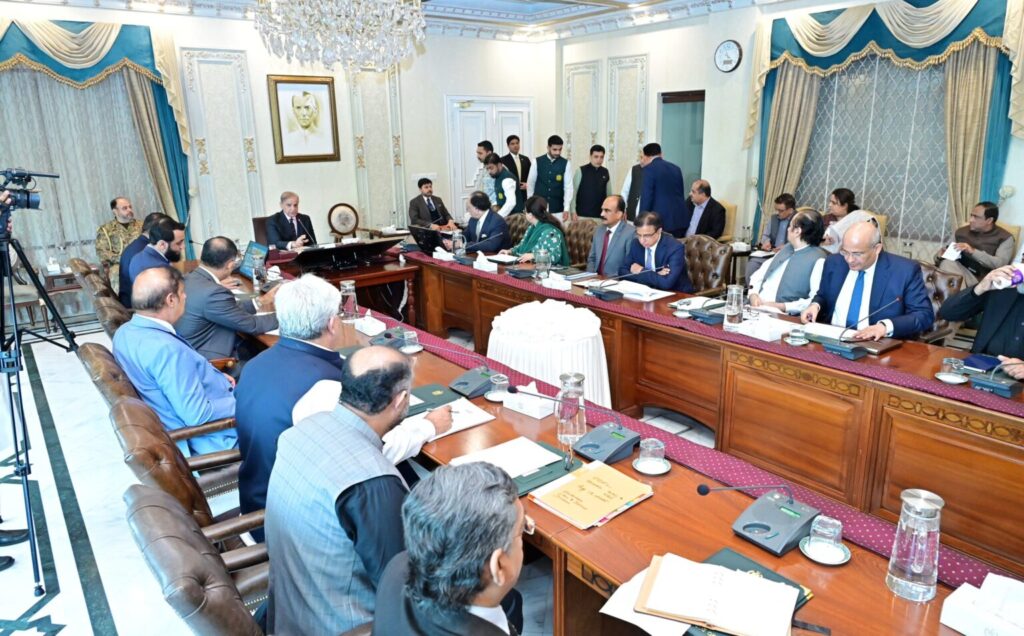
Pakistan is advancing aggressively toward its cashless future. Prime Minister Shehbaz Sharif presided over a high-level review meeting, showcasing considerable progress while outlining bold targets for the nation’s economic transformation.
Progress & Current Developments
- Raast Expansion & Adoption:
— Over 40 million users are now actively benefiting from Pakistan’s instant payment system, Raast, which is already being used for all federal government transactions.
— In Q3 of FY25 alone, digital channels accounted for 89% of retail payment volume, processing 371 million Raast transactions worth Rs 8.5 trillion.
— Since its 2021 launch, Raast has managed over 892 million transactions totaling Rs 20 trillion (≈ US $72 billion) as of July 2025. - Digital Public Infrastructure & IDs:
— Through the Pakistan Digital Public Infrastructure (PDPI) initiative, every citizen will receive a digital ID integrating CNIC, biometric data, and mobile numbers—set to enable secure and inclusive digital payments. - Infrastructure Build-Out:
— The Federal Development Authority has granted right-of-way for fiber connectivity, with discussions underway with Pakistan Railways and the National Highway Authority to strengthen digital infrastructure nationwide. - Institutional Architecture:
— Three specialized committees are now in place—Digital Payments Innovation and Adoption, Digital Public Infrastructure, and Government Payments Committee—alongside activation of the Pakistan Digital Authority to champion the cashless push.
Future Aims & Ambitions
- Digital Financial Services Expansion:
— By end of FY2025–26, targets include:
• 2 million active digital merchants via mobile and web-based platforms;
• Growth of mobile and internet banking users from 95 million to 120 million;
• Doubling annual digital transactions to 15 billion. - Formalization & Inclusion:
— Aim for 100% formal remittances through banks or mobile wallets (compared to 80% now), enhancing transparency and access.
— Leveraging widespread broadband (143 million users) and dominant mobile wallets like JazzCash (21 million Monthly Active Users) and Easypaisa (18 million Monthly Active Users), Pakistan is ramping up inclusion in both urban and rural settings. - Fintech & Ecosystem Development:
— The State Bank of Pakistan plans to extend Raast’s scope to include merchant payments, QR code use, cross-border remittances, and fintech app development through open APIs.
Why It Matters
These efforts are not just about convenience—they represent wholesale transformation:
- For citizens, particularly women and low-income groups: easier access to loans, savings, insurance, and social service payments.
- For the economy: greater transparency, broader tax base, reduced leakages, and formalization of informal sectors.
- If fully implemented, cashless transactions could become the norm within a decade, radically reforming fiscal and financial systems.
Conclusion
Pakistan’s shift to a cashless, digitally empowered economy is gaining real traction. With over 40 million Raast users, an emerging digital ID framework, and formidable infrastructure plans, the groundwork is set. The 2025–26 targets—doubling digital transactions, expanding merchants, and deepening financial inclusion—signal a transformative leap. What remains critical is sustained execution, public trust-building, and rural digital outreach to ensure the promise of a cashless Pakistan is fully realized.