
In a landmark move toward “One Nation, One Identity,” the Government of Pakistan and the National Database and Registration Authority (NADRA) have officially notified sweeping amendments to the National Identity Card (NIC) and Pakistan Origin Card (POC) Rules. Published in the Gazette of Pakistan on February 24, 2026, these reforms transition the country from a fragile chip-based system to a high-security, future-proof digital framework.
Why the Revamp? Future-Proofing the Law
The primary catalyst for this overhaul is the need for legislative flexibility. Previously, any change in card technology required lengthy legal updates. The new rules now legally authorize NADRA to use “QR codes or any other technological feature” for identity verification. This allows the authority to adopt future innovations, such as NFC or blockchain-based credentials, without needing fresh cabinet approvals.
Detailed Key Features of the New ID System
The 2026 revamp is not merely a cosmetic change but a fundamental shift in how “identity” is defined and verified in Pakistan.
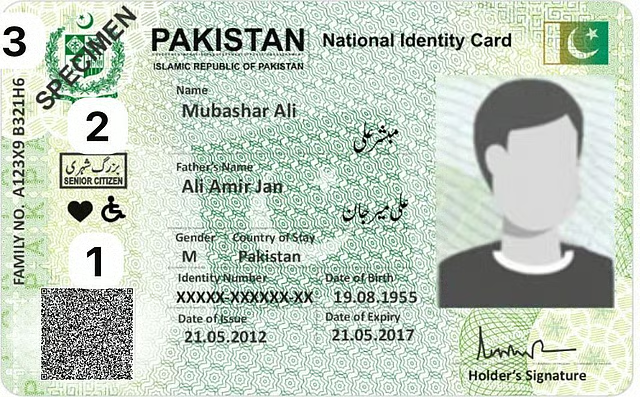
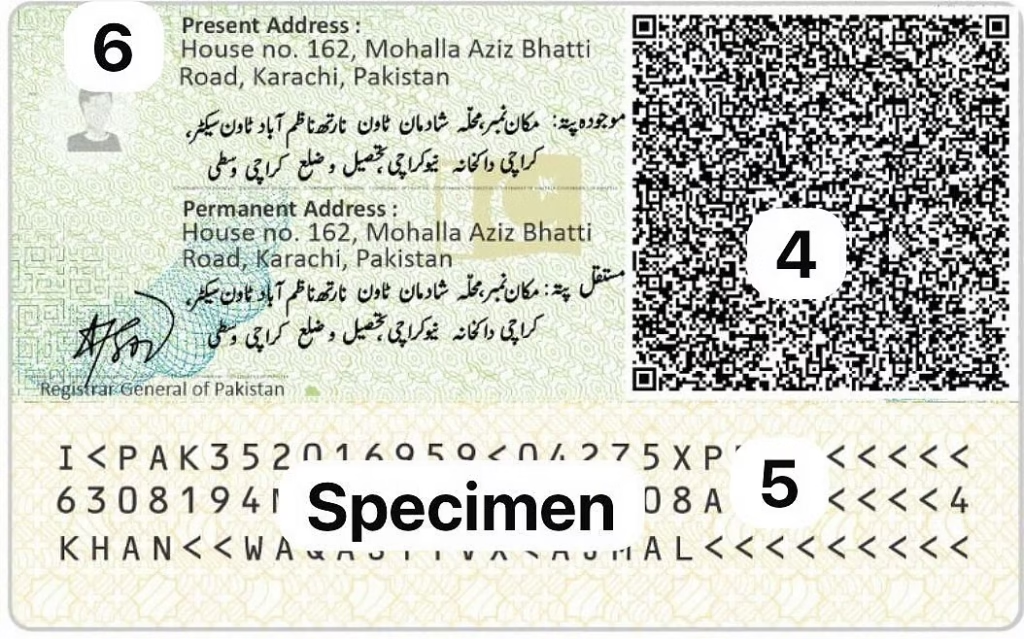
- Statutory QR-Code Integration: The microchip, which was expensive to produce and required specialized hardware to read, is being replaced by a high-density, machine-readable QR code. This code is now legally defined as a secure two-dimensional barcode capable of storing encoded identity data. It allows for instant verification at banks, airports, and government offices using a standard smartphone, facilitating both online and offline authentication.
- Technological Flexibility: A crucial clause in the new rules allows NADRA to adopt “QR code or any other technological feature” in the future. This is a strategic “future-proofing” move, ensuring that as technologies like NFC (Near Field Communication) or Blockchain-based IDs mature, NADRA can integrate them without needing repeated, time-consuming legal amendments from the Cabinet.
- Multi-Modal Biometric Foundation: The biometric definition has been expanded beyond thumb impressions. The system now officially integrates:
- Iris Scanning: Utilizing unique eye patterns to verify individuals whose fingerprints may be damaged or faded.
- Facial Recognition: Enabling “contactless” onboarding and verification through the Pak ID mobile app.
- Senior Citizen Lifetime Status: To honor and facilitate elderly citizens (aged 60+), the new cards feature a distinct Senior Citizen Logo. These cards are issued with lifetime validity, permanently exempting the elderly from the logistical hurdle of periodic renewals.
- Unified Card Architecture: The “Two-Tier” system (where some citizens had chip cards and others had non-chip cards) has ended. Every Pakistani, including Overseas Pakistanis (NICOP) and AJK Residents (who now receive a specific geographic inscription), will carry a standardized, high-security smart document.
- Automated Fraud Kill-Switch: The new rules tighten security significantly. If a card is reported lost or suspended for fraud, all digital authentication and verification services linked to that ID are immediately terminated across all institutional databases (Banks, Telecoms, etc.), preventing any further misuse.
How to Obtain the New Smart ID
The transition to the new 2026 format is already underway. Here is how you can secure yours:
- Walk-in Application: Visit any NADRA Registration Centre (NRC) or a Mobile Registration Van (MRV).
- Digital Application (Pak ID App): For renewals and modifications, the Pak ID App (available on iOS and Android) allows you to capture your own photograph, scan fingerprints via your phone’s camera, and pay fees via credit/debit card or mobile wallets (EasyPaisa/JazzCash).
- The Registration Facility: Until December 31, 2026, first-time applicants can register without a computerized birth certificate if they pass a biometric verification of their immediate family members (parents/siblings).
- Verification Certificates: If your fingerprints fail at a bank, you can now visit a NADRA center to get a Facial Recognition Verification Certificate for just 180 PKR (approx. ¥5 / $0.70), which remains valid for 7 days.
Timeline and Availability
The system became active on February 24, 2026.
- New Applicants: Will automatically receive the updated QR-enabled format.
- Existing Cardholders: Your current card remains valid until its expiry date. There is no legal requirement to replace a valid chip card immediately.
- Processing Time:
- Normal: 30 working days.
- Urgent: 12 working days.
- Executive: 7 working days.